Plastering for Holbeck Flats and Conversions
Boarding, skimming and making good inside Holbeck's converted mills and newer apartment blocks, for owners and landlords who need a clean, flat finish with as little disruption to neighbours as possible.
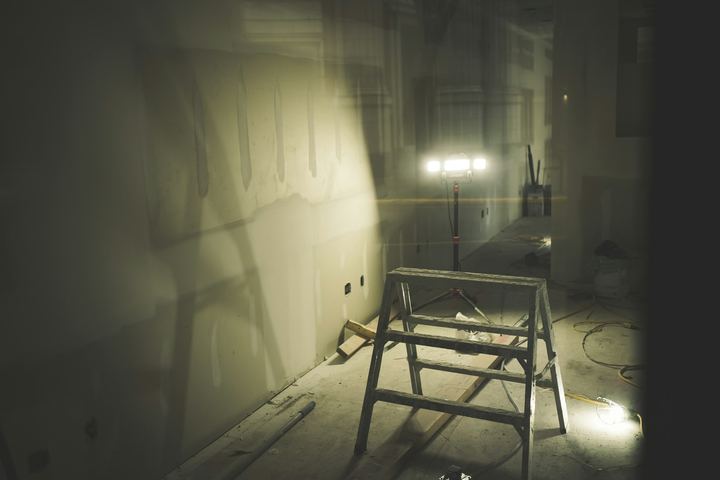
Holbeck · LS11
Mills, warehouses and apartments around Water Lane
Holbeck was one of the early centres of Leeds industry, and its old mills and warehouses still stand around Marshall Street and Water Lane. Temple Works, with its famous Egyptian-style front, is the best known. Many of the surrounding buildings have since been converted into flats and offices, and new apartment blocks have gone up alongside them as the area south of the station has been redeveloped.
Inside, those buildings are a mix of old and new. Conversions often have thick brick external walls, sometimes left exposed and sometimes dry lined, with internal partitions in metal stud and plasterboard. Newer blocks are almost entirely framed and boarded. So in Holbeck, plastering usually means board and skim systems, taping and jointing, and careful repairs to surfaces that have to sit flush with neighbouring finishes.
Typical repairs in converted and new-build flats
Board walls and ceilings pick up damage in ways that solid plaster does not. Door handles punch holes, tenants hang shelves with the wrong fixings, and movement in the frame opens cracks at board joints and along ceiling lines. We cut out damaged sections, fit new board with the right backing, then tape, fill and skim so the repair is invisible. Where a whole wall is marked, a full skim is often quicker.
Water damage is the other recurring issue in flats, usually from a leak in the apartment above or a failed shower seal. The leak must be repaired and the board allowed to dry before any work starts. Board that has softened or stained is replaced rather than covered. On the older external walls of a mill conversion, dry lining or a skim over sound existing plaster is usually the practical way to a smooth finish.
Access, building rules and arranging the job
Working in an apartment building is different from a house. Many blocks have rules on working hours, lift use and where materials and waste can go, and some require notice to the building manager before work begins. We follow whatever arrangements the building has in place, protect communal areas and carry waste out as we go. Parking in this part of the city is limited, so we plan deliveries in advance.
Landlords and letting agents often need a flat turned round between tenancies, and owners usually want work finished with minimal disruption to neighbours. Either way, we start with a free visit to look at the damage, check the board and wall types, and agree access. A written quote follows that sets out the work room by room, so you can pass it to a managing agent if needed.
Services
Most asked-for in Holbeck
Skimming & reskimming
A thin, hard new face on walls and ceilings that are sound underneath but look tired, patched or lumpy.
See the servicePlasterboarding & dry lining
New stud walls, boarded ceilings, insulated linings and dot and dab.
See the service
Patch & crack repairs
Holes left by the electrician, cracks over doorframes, knocked corners and the patch where the old boiler used to be.
See the serviceAlso in Holbeck
Everything else we do
FAQs
Plastering in Holbeck: questions
Can you repair a hole in a plasterboard wall in a Holbeck flat?
Yes. Small holes are backed and filled, while larger ones are cut back to a neat square, a new piece of board is fitted with support behind it, and the area is taped and skimmed. In Holbeck apartments we also check the wall behind for cables and pipes first.
Do you work in occupied apartment buildings?
We do. Most apartment work happens in occupied buildings, so we keep noise to agreed hours, protect lifts and corridors and keep materials out of shared spaces. If your building needs advance notice or specific paperwork from contractors, let us know at the visit and we will work to it.
What causes cracks along the ceiling joints in new-build flats?
New buildings settle and their frames move slightly as they dry out and go through the seasons. That movement tends to show at board joints and where walls meet ceilings. Once things have settled, the cracks can be raked out, taped and filled, then skimmed so the surface is flat again.
Is it better to dry line or skim the old brick walls in a Holbeck conversion?
It depends on the wall. If existing plaster on the brick is sound and reasonably flat, a skim is the simpler option. If it is uneven, failing or bare brick, dry lining gives a flat new surface quickly. In Holbeck mill buildings, any wall showing damp needs the cause dealt with first.